

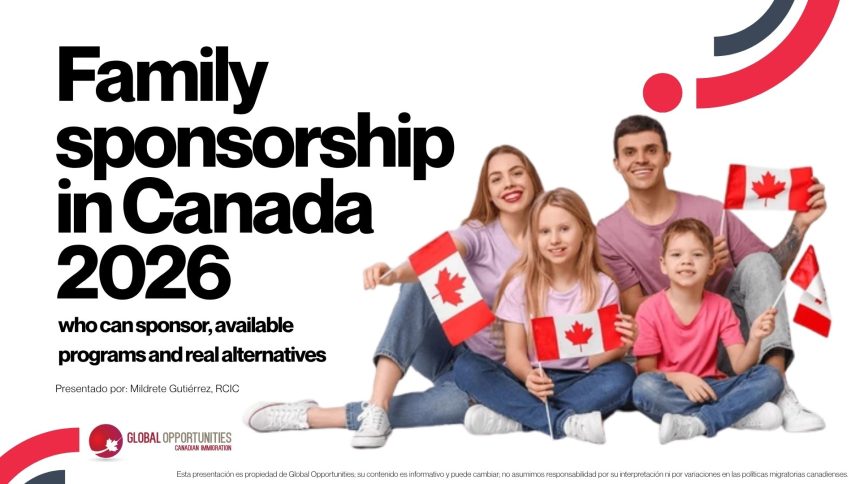
Can a family member help you immigrate to Canada? For thousands of newcomers every year, family sponsorship becomes the fastest route to permanent residence. Behind the paperwork lies something much more personal: the desire to reunite parents, spouses, children, and loved ones under one roof.
What Is Family Sponsorship in Canada?
Family sponsorship is one of Canada’s most important immigration pathways. It allows Canadian citizens and permanent residents to sponsor certain family members and help them obtain permanent residence.
Unlike economic immigration programs that focus heavily on education, language scores, or work experience, family sponsorship places relationships at the center of the process. The goal is simple: keeping families together.
Many newcomers spend years separated from their spouses, children, or parents. Canada’s immigration system recognizes that family reunification plays a major role in successful settlement.
Who Can Sponsor a Family Member?
To sponsor someone, the sponsor must generally:
- Be a Canadian citizen or permanent resident.
- Be at least 18 years old.
- Live in Canada, or intend to return if living abroad as a citizen.
- Demonstrate the ability to financially support the sponsored person.
- Sign an undertaking agreement.
That agreement matters. It means the sponsor accepts financial responsibility for the sponsored relative for a specific period.
A sponsor cannot receive social assistance for reasons other than disability. Certain criminal convictions may also affect eligibility.
Which Family Members Can Be Sponsored?
Canada allows sponsorship for several categories of relatives.
Spouse, Common-Law Partner, or Conjugal Partner
This remains the largest sponsorship category. Married spouses, common-law partners, and certain conjugal partners may qualify.
The immigration authorities closely examine these applications. They want to ensure the relationship is genuine and not entered into solely for immigration purposes.
Photos, travel records, messages, financial documents, and shared responsibilities often become important pieces of evidence.
Dependent Children
Children under the age limits established by immigration regulations may also qualify as dependents.
Adopted children may be eligible as well, provided legal requirements are met.
For many immigrant families, sponsoring children becomes the most emotional part of the process. Years of separation can suddenly come to an end.
Parents and Grandparents
Canada’s Parents and Grandparents Program allows eligible sponsors to bring their parents or grandparents to the country.
The program often operates through an invitation system because demand significantly exceeds available spaces.
Applicants must usually meet minimum income requirements over several years. Financial stability becomes particularly important here.
How Much Does Family Sponsorship Cost?
Several government fees apply to sponsorship applications.
Typical costs include:
- Sponsorship fee.
- Permanent residence processing fee.
- Right of permanent residence fee.
- Biometrics fee when required.
- Medical examinations.
- Police certificates.
The total government cost for sponsoring a spouse often exceeds €700, while additional expenses such as translations, legal assistance, or document collection may increase the final amount.
Parents and grandparents sponsorship applications generally involve higher overall expenses.
Processing Times Can Vary
One question appears constantly: how long does family sponsorship take?
The answer depends on the category and the country of residence.
Spousal sponsorship applications often take around 12 months, although some files move faster while others encounter delays. Parent sponsorship cases may require considerably more time.
Incomplete applications remain one of the biggest causes of delays. Missing documents, translation issues, or inconsistent information can add months to a file.
Frankly, many applicants underestimate the importance of organization. A single forgotten document can stall an application for weeks.
Inland vs. Outland Sponsorship
Spousal sponsorship generally falls into two categories.
Inland Sponsorship
The sponsored spouse already lives in Canada.
In many cases, the applicant may qualify for an open work permit while the application is being processed.
Outland Sponsorship
The spouse lives outside Canada.
Applications may sometimes move faster depending on the visa office responsible for processing.
The choice depends on individual circumstances, travel plans, and family needs.
Common Mistakes That Delay Applications
Surprisingly, many refusals involve avoidable errors.
Some of the most common problems include:
- Missing signatures.
- Incomplete forms.
- Insufficient proof of relationship.
- Financial documentation errors.
- Contradictory information.
- Expired documents.
A couple may genuinely share their lives together, yet fail to provide enough evidence to immigration officers. That’s where many applications become vulnerable.
One immigration consultant once compared sponsorship files to assembling a puzzle: every small piece helps reveal the entire picture.
Can Sponsored Family Members Work in Canada?
Certain sponsored spouses living in Canada may obtain an open work permit while waiting for permanent residence approval.
This opportunity allows couples to establish financial stability and begin building their lives together much earlier.
Children who become permanent residents gain access to education and healthcare services according to provincial rules.
Parents and grandparents who receive permanent residence also enjoy many of the rights granted to other permanent residents.
Why Family Sponsorship Remains One of Canada’s Most Important Immigration Programs
Economic immigration often dominates the headlines. Express Entry scores, labor shortages, and provincial nominations receive most of the attention.
Yet family sponsorship continues to shape thousands of immigration stories every year.
Behind every application sits a husband waiting at an airport, grandparents hoping to meet grandchildren, or parents counting the months until they can finally live together again. Immigration paperwork may fill hundreds of pages, but the reason people apply usually fits into a single sentence: they simply want to be together.